From 31 July 2026, new rules have come into force in Slovakia to extend the lifespan of products and promote repair instead of replacement. Manufacturers of selected products are now required to provide repairs under reasonable conditions, make spare parts available, and refrain from using technical solutions that unnecessarily prevent repairs.
If a consumer chooses repair when making a warranty claim, the period of liability for defects is extended by an additional 12 months after the first repair. The right to repair therefore supports not only consumers but also the circular economy – because the best waste is the waste that is never created.
Longer product lifespans. Less waste. More repairs.

The legislative change is based on the European Right to Repair Directive – Directive (EU) 2024/1799. Slovakia has transposed the Directive primarily through Act No. 310/2025 Coll., which amended the Consumer Protection Act and the Civil Code.
The most important changes
- Upon a consumer’s request, the manufacturer must provide repair services for selected products even after the statutory liability period for defects has expired, provided that the repair is technically possible.
- Repairs must be carried out free of charge or at a reasonable price and within a reasonable period.
- Spare parts and repair tools must be offered at a price that does not discourage consumers from choosing repair.
- Manufacturers may not, without a legitimate reason, use hardware or software solutions that prevent repairs.
- They may not block the use of safe original, used, compatible, or 3D-printed spare parts.
- Manufacturers must publish information on repair services and indicative prices for common repairs on their website.
- If a consumer chooses repair when making a warranty claim, the period of liability for defects is extended by 12 months after the first repair.
- Consumers may request a European Repair Information Form from a repair service provider, setting out the price, scope, and conditions of the repair; the stated conditions are binding for at least 30 days.
The new rules mainly apply to common consumer electronics and household appliances such as washing machines, refrigerators, dishwashers, televisions, smartphones, tablets, vacuum cleaners, and tumble dryers. The list of covered products will gradually be expanded.
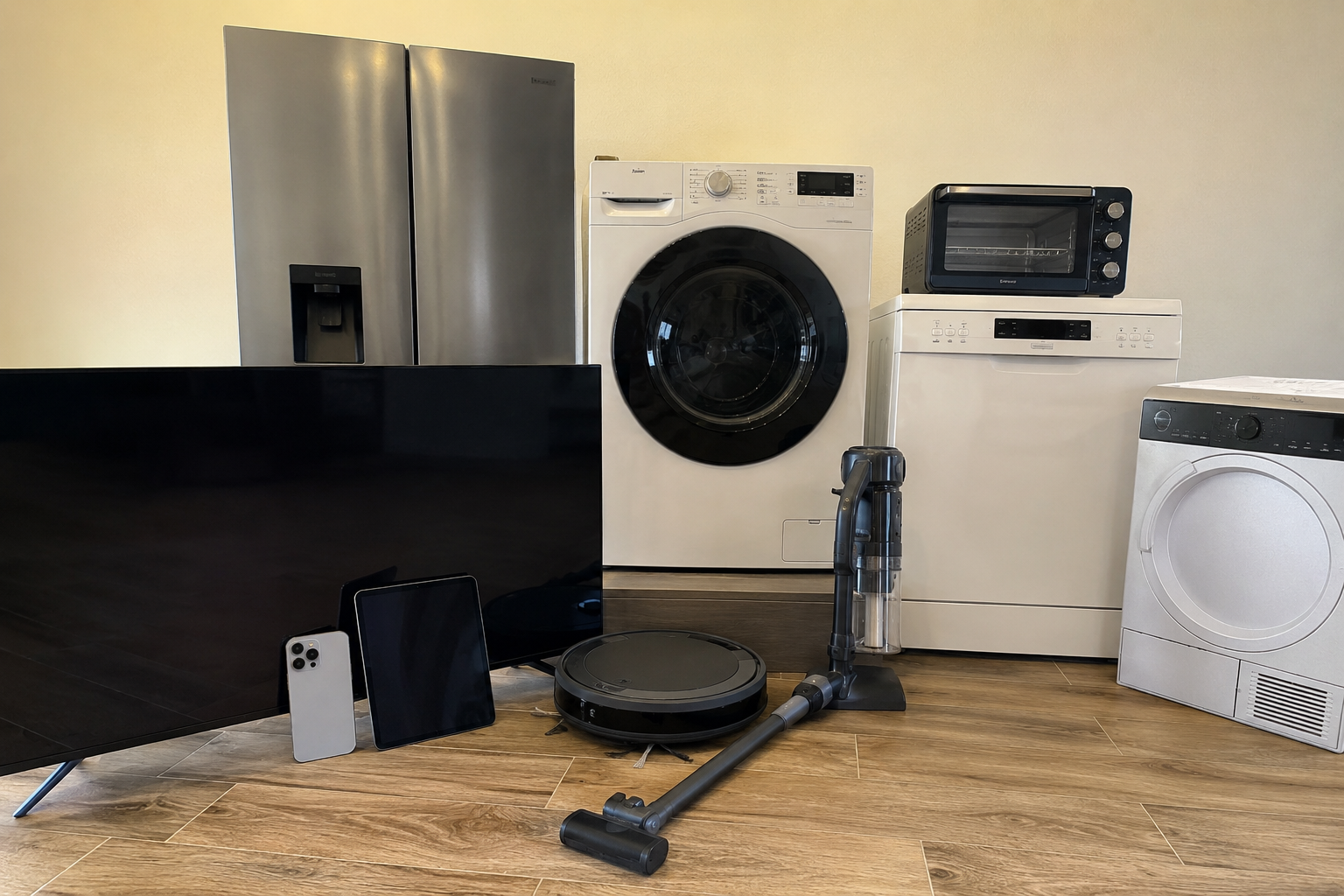
However, this is not a universal right to repair every product. For the time being, the obligation applies only to product groups for which European repairability requirements already exist, including washing machines, washer-dryers, refrigerators, dishwashers, televisions, vacuum cleaners, tumble dryers, smartphones, tablets, cordless phones, servers, and certain products containing batteries for light means of transport. The list will continue to expand. Further details are also provided by the European Commission.
We will continue to cover this topic, which is important for the circular economy and waste prevention, and will also present inspiring examples of companies that have been focusing on product repairability, particularly in the field of electronics, for many years.